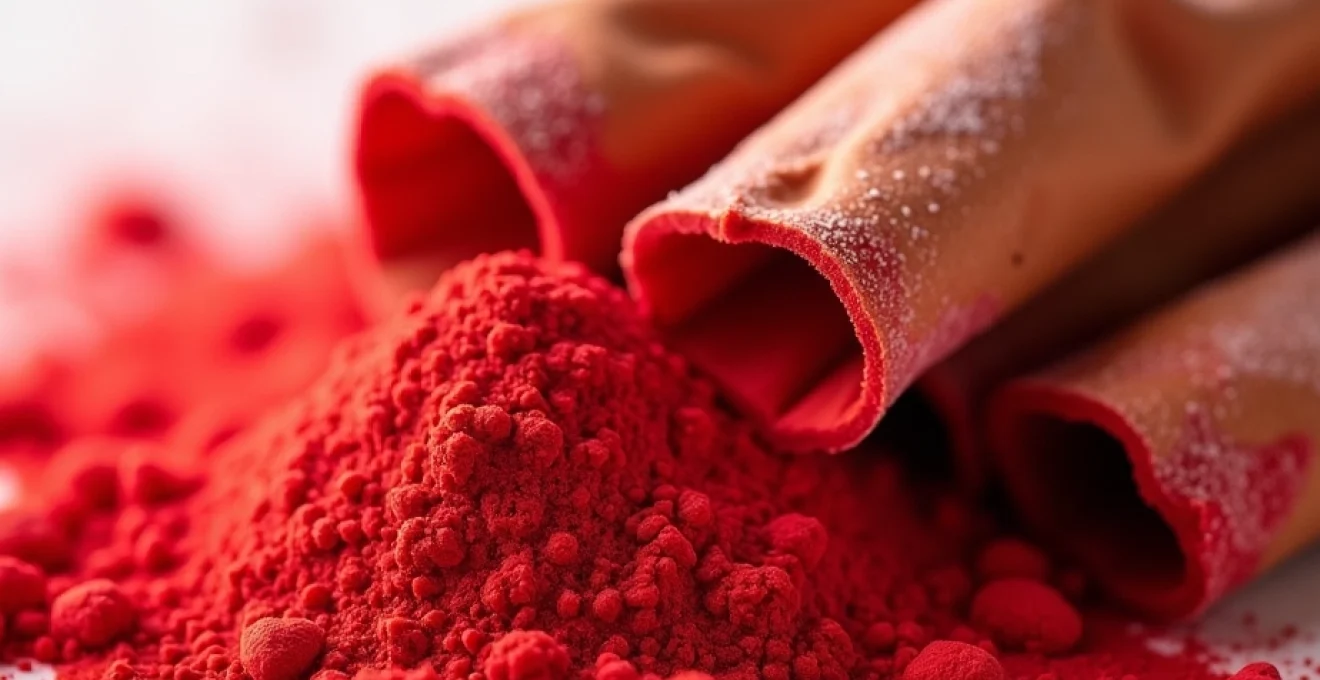
The vibrant red colour of Hot Tamales candy has captivated consumers since 1950, making these cinnamon-flavoured sweets a cinema staple and confectionery favourite. However, mounting scientific evidence and regulatory scrutiny surrounding synthetic food dyes, particularly Red Dye No. 3 and Red Dye No. 40, have raised significant safety concerns within the confectionery industry. Recent legislative developments, including California’s landmark Food Safety Act and the FDA’s January 2025 decision to ban Red Dye No. 3, signal a fundamental shift in how regulatory authorities approach artificial colourant safety assessment.
The intersection of consumer preference for visually appealing products and emerging toxicological data presents a complex challenge for manufacturers like Just Born Inc. Understanding the chemical composition, regulatory framework, and safety implications of red food dyes becomes increasingly critical as industry standards evolve and consumer awareness heightens regarding potential health risks associated with synthetic colourants.
Hot tamales candy red dye composition and manufacturing process
Red dye no. 40 (allura red AC) chemical structure and properties
Red Dye No. 40, chemically designated as disodium 6-hydroxy-5-[(2-methoxy-5-methyl-4-sulfophenyl)azo]-2-naphthalenesulfonate , represents the most extensively utilised synthetic colourant in the American food industry. This petroleum-derived azo compound exhibits exceptional stability across varying pH levels and temperature ranges, making it particularly suitable for confectionery applications requiring prolonged shelf stability. The molecular structure incorporates sulphonate groups that enhance water solubility, enabling uniform colour distribution throughout the candy matrix.
Manufacturing processes utilise Red Dye No. 40 in concentrations typically ranging from 0.1% to 0.5% by weight in confectionery products. The dye’s chromophoric properties stem from its extended conjugated system, which absorbs light wavelengths between 480-520 nanometres, producing the characteristic cherry-red appearance associated with Hot Tamales candy. Quality control protocols mandate batch-to-batch colour consistency within strict tolerance parameters, requiring precise measurement and mixing procedures during production.
FD&C red no. 3 (erythrosine) presence in hot tamales formulation
Erythrosine, designated as FD&C Red No. 3, historically appeared in certain Hot Tamales product variants, particularly seasonal formulations and specific flavour combinations. This xanthene-based synthetic dye contains four iodine atoms within its molecular structure, distinguishing it chemically from azo-based colourants. The presence of iodine atoms contributes to the compound’s unique photosensitivity characteristics and potential thyroid-related health concerns identified in laboratory studies.
Recent regulatory developments have prompted Just Born Inc. to reformulate products containing Red Dye No. 3 , with the company announcing complete elimination of this colourant from their product lines by 2027. The reformulation process involves extensive testing to maintain colour consistency and consumer acceptability whilst transitioning to alternative colourant systems. This proactive approach demonstrates industry responsiveness to evolving safety standards and regulatory requirements.
Just born inc. manufacturing standards and quality control protocols
Just Born Inc. operates under stringent manufacturing protocols that exceed baseline FDA requirements for food colourant usage and safety verification. The company’s quality assurance framework incorporates multiple analytical checkpoints throughout the production process, including raw material verification, in-process monitoring, and finished product testing. Spectrophotometric analysis ensures colour consistency within predetermined specifications, whilst high-performance liquid chromatography (HPLC) validates colourant purity and concentration levels.
Manufacturing facilities implement Good Manufacturing Practice (GMP) standards specifically tailored for confectionery production, including environmental controls that maintain optimal temperature and humidity conditions. Traceability systems track individual ingredient lots from supplier to finished product , enabling rapid identification and isolation of any quality concerns. Regular third-party audits verify compliance with industry standards and regulatory requirements, reinforcing the company’s commitment to product safety and quality excellence.
Synthetic versus natural colourant usage in Cinnamon-Flavoured confectionery
The transition from synthetic to natural colourants in cinnamon-flavoured confectionery presents unique technical challenges related to colour stability, pH sensitivity, and interaction with spice compounds. Natural red colourants, such as paprika extract and beetroot powder, exhibit different chemical behaviours compared to synthetic alternatives, requiring reformulation of existing recipes and manufacturing processes. Cinnamon’s inherent brown coloration can interfere with desired red hues, necessitating careful balance between flavour authenticity and visual appeal.
Economic considerations significantly influence colourant selection decisions, with natural alternatives typically costing 3-5 times more than synthetic counterparts. However, consumer preference trends increasingly favour naturally-coloured products, creating market pressure for manufacturers to absorb additional costs whilst maintaining competitive pricing. The challenge becomes particularly acute in mass-market confectionery where price sensitivity remains paramount to commercial viability.
Regulatory framework and safety assessment standards for food colourants
FDA CFR title 21 part 74 certification requirements for red dyes
The Code of Federal Regulations Title 21 Part 74 establishes comprehensive certification requirements for colour additives used in foods, drugs, and cosmetics. Red Dye No. 40 requires batch certification through FDA-approved analytical laboratories, ensuring each production lot meets stringent purity specifications before commercial distribution. Certification protocols mandate testing for heavy metals, subsidiary colours, and organic impurities, with specific limits established for each potential contaminant category.
Manufacturers must maintain detailed records documenting colourant sources, certification numbers, and usage quantities for regulatory inspection purposes. The certification process typically requires 2-3 weeks per batch , creating inventory management challenges that manufacturers must navigate through strategic planning and safety stock maintenance. Non-certified batches face immediate removal from commerce, emphasising the critical importance of compliance with certification requirements.
European food safety authority (EFSA) ADI values for synthetic red colourants
The European Food Safety Authority establishes Acceptable Daily Intake (ADI) values based on comprehensive toxicological evaluations and safety assessments. Red Dye No. 40 maintains an ADI of 7 milligrams per kilogram of body weight per day, derived from no-observed-adverse-effect-level (NOAEL) studies conducted in laboratory animals. This value incorporates safety factors accounting for species variation and individual sensitivity differences within human populations.
EFSA’s risk assessment methodology considers cumulative exposure from multiple dietary sources, recognising that consumers encounter synthetic colourants across diverse food categories. Recent exposure assessments indicate that certain population subgroups, particularly children aged 3-9 years, may approach or exceed established ADI values through regular consumption of brightly-coloured confectionery and processed foods. These findings have prompted discussions regarding potential ADI revisions and enhanced labelling requirements across European Union member states.
Joint FAO/WHO expert committee on food additives (JECFA) toxicological evaluations
The Joint FAO/WHO Expert Committee on Food Additives provides international guidance on food additive safety through comprehensive toxicological evaluations and risk assessments. JECFA’s most recent evaluation of Red Dye No. 40 reaffirmed its safety for human consumption at current usage levels, whilst acknowledging emerging research suggesting potential behavioural effects in sensitive individuals. The committee’s assessment process incorporates data from multiple sources, including industry-sponsored studies, academic research, and regulatory submissions.
JECFA evaluations serve as the scientific foundation for international trade standards and national regulatory decisions worldwide. The committee’s risk assessment methodology emphasises evidence-based decision-making whilst acknowledging uncertainties inherent in extrapolating animal study results to human populations. Regular re-evaluation schedules ensure that safety assessments remain current with evolving scientific knowledge and emerging research findings that may influence risk characterisation.
Food standards agency UK position on artificial colour additives
The United Kingdom’s Food Standards Agency maintains a precautionary stance regarding artificial colour additives, particularly those linked to hyperactivity and behavioural changes in children. Following the Southampton study’s findings in 2007, the FSA recommended that manufacturers voluntarily remove six synthetic colours, including certain red dyes, from products marketed to children. This guidance reflects the agency’s commitment to protecting vulnerable populations even when scientific evidence remains inconclusive.
UK labelling requirements mandate warning statements on products containing specific colour additives, informing consumers that these substances “may have an adverse effect on activity and attention in children.” This approach balances consumer choice with transparent information provision, enabling informed decision-making whilst avoiding outright prohibitions. The FSA continues monitoring emerging research and may adjust recommendations based on new scientific evidence or changing risk-benefit assessments.
Toxicological studies and health risk analysis of red food dyes
Comprehensive toxicological research spanning several decades has examined the safety profile of red food dyes through various experimental methodologies and study designs. Animal studies investigating Red Dye No. 40 have revealed potential concerns including hyperactivity behavioural changes, immune system impacts, and genotoxic effects at high exposure levels. The landmark Southampton University studies published in 2004 and 2007 demonstrated statistically significant increases in hyperactive behaviour among children consuming artificial colour mixtures, providing pivotal evidence that influenced regulatory approaches across multiple jurisdictions.
Long-term carcinogenicity studies conducted in laboratory rodents have yielded mixed results, with some investigations suggesting increased tumour incidence at extremely high exposure levels far exceeding typical human consumption patterns. The challenge in interpreting these findings lies in determining their relevance to human health risks , particularly given significant physiological differences between test species and humans. Meta-analyses of available research indicate that whilst acute toxicity risks remain low at current consumption levels, chronic exposure effects require continued investigation, especially regarding vulnerable populations such as children and individuals with attention deficit hyperactivity disorder.
Mechanistic studies have begun elucidating potential pathways through which synthetic red dyes might influence human health. Research suggests that certain individuals may possess genetic polymorphisms affecting their ability to metabolise azo-based compounds, potentially increasing susceptibility to adverse effects. Additionally, emerging research explores the role of gut microbiota in colourant metabolism, with preliminary findings indicating that dietary patterns and individual microbiome composition may influence toxicokinetic profiles and subsequent health outcomes.
Recent epidemiological studies have attempted to correlate population-level consumption of artificial food colours with health outcomes, though establishing causation remains challenging due to confounding variables and the complexity of modern dietary patterns.
Consumer exposure assessment and daily intake calculations
Accurate assessment of consumer exposure to red food dyes requires sophisticated modelling approaches that consider consumption patterns across demographic groups, product categories, and seasonal variations. The FDA’s Total Diet Study provides baseline exposure data through analysis of foods as typically consumed, revealing that average daily intake of Red Dye No. 40 ranges from 0.1 to 12.3 milligrams per day across different age groups. Children consistently demonstrate higher per-kilogram body weight exposure levels due to their preference for brightly-coloured foods and smaller body size relative to consumption quantities.
Probabilistic exposure models account for variability in individual consumption habits and product formulation differences across manufacturers. These sophisticated analytical frameworks incorporate data from national nutrition surveys, food composition databases, and industry usage level reports to generate realistic exposure distributions. High-end consumers, representing the 95th percentile of exposure, may consume quantities approaching or exceeding established safety margins , particularly when multiple sources of synthetic colourants are considered cumulatively throughout daily dietary intake.
Seasonal consumption patterns significantly influence exposure assessments, with Halloween and other candy-centric holidays creating temporary spikes in red dye consumption among certain population groups. Research indicates that some children may consume 5-10 times their typical daily colourant intake during peak candy consumption periods, raising questions about appropriate risk assessment methodologies for episodic high-level exposures. These consumption patterns necessitate consideration of both chronic daily exposure scenarios and acute high-consumption events in comprehensive safety evaluations.
Geographic and socioeconomic factors also influence exposure patterns, with certain demographic groups showing preferences for specific product categories containing higher concentrations of synthetic colourants. Urban populations often exhibit different consumption patterns compared to rural communities, whilst income levels correlate with access to premium products that may utilise natural colourant alternatives. Understanding these variations becomes crucial for developing targeted risk communication strategies and regulatory approaches that address diverse population needs.
Alternative natural colourant solutions for confectionery applications
Paprika extract (capsanthin) as red dye replacement in hard sweets
Paprika extract, containing the carotenoid compound capsanthin as its primary colouring principle, offers a naturally-derived alternative to synthetic red dyes in confectionery applications. This extract provides excellent colour intensity and stability in low-moisture confectionery products, making it particularly suitable for hard sweets and sugar-based formulations. The compound’s lipophilic nature requires careful formulation considerations to ensure uniform distribution and prevent colour migration during storage periods.
Processing considerations for paprika extract include light sensitivity and thermal stability limitations that may affect manufacturing protocols and packaging requirements. The extract’s natural antioxidant properties can provide additional product benefits beyond coloration, potentially extending shelf life and reducing oxidative degradation of flavour compounds. However, cost implications remain significant, with paprika extract pricing typically 4-6 times higher than synthetic alternatives, necessitating careful economic analysis for large-scale implementation.
Beetroot powder (betalains) stability in High-Sugar environments
Betalain pigments derived from beetroot offer vibrant red coloration with unique stability characteristics in high-sugar confectionery environments. Unlike many natural colourants that degrade rapidly under acidic conditions, betalains demonstrate remarkable pH stability across the range typically encountered in candy formulations. The water-soluble nature of these compounds facilitates incorporation into various confectionery matrices whilst maintaining colour uniformity throughout the product structure.
Technical challenges associated with beetroot-derived colourants include potential interactions with other ingredients and sensitivity to elevated processing temperatures. Research indicates that betalain degradation accelerates significantly above 60°C, requiring modified manufacturing protocols to preserve colour integrity. Additionally, the earthy flavour notes inherent in beetroot extracts may influence product taste profiles , necessitating careful flavour masking or complementary flavouring approaches to maintain consumer acceptability.
Annatto extract (bixin) performance in Cinnamon-Spiced confections
Annatto extract, containing the carotenoid compounds bixin and norbixin, provides orange-red coloration that complements the natural brown tones of cinnamon-flavoured confections. This natural colourant demonstrates excellent stability in oil-based systems and maintains colour intensity throughout typical confectionery shelf life periods. The compound’s compatibility with cinnamon essential oils and other spice extracts makes it particularly suitable for specialty confectionery applications requiring complex flavour profiles.
Manufacturing considerations for annatto extract include solubility characteristics that may require specialised processing equipment or formulation adjustments. The extract’s natural origin provides marketing advantages for manufacturers targeting health-conscious consumers, whilst regulatory approval exists across major international markets. However, potential allergenicity concerns require careful labelling and risk assessment for sensitive consumer populations, particularly those with tree nut or seed allergies.
Carmine (cochineal extract) regulatory status and labelling requirements
Carmine, derived from cochineal insects, represents one of the most stable and vivid natural red colourants available for confectionery applications. This ancient colouring agent provides exceptional colour fastness and intensity comparable to synthetic alternatives, making it attractive for premium confectionery products requiring long-term colour stability. Regulatory approval exists across most international markets, though specific labelling requirements vary between jurisdictions.
Consumer acceptance challenges arise from carmine’s insect-derived origin, with certain religious, cultural, and dietary preferences creating market limitations for products utilising this colourant. Mandatory allergen labelling requirements in many jurisdictions necessitate clear identification on product packaging, potentially affecting consumer purchasing decisions. Additionally, supply chain considerations include seasonal availability variations and price volatility associated with agricultural production cycles in primary source regions.
Industry standards and quality assurance protocols for food colourant safety
Contemporary quality assurance protocols for food colourant safety encompass comprehensive testing regimens that extend far beyond basic regulatory compliance requirements. Industry leaders implement multi-tiered analytical programs incorporating supplier qualification, incoming material verification, and finished product testing to ensure consistent safety and quality standards. Advanced analytical techniques including LC-MS/MS and ICP-MS enable detection of trace contaminants and verification of colourant purity at unprecedented sensitivity levels.
Supplier qualification protocols require extensive documentation of manufacturing processes, quality systems,
and traceability systems that enable rapid response to quality issues or contamination events. These systems require vendors to maintain certified analytical capabilities and demonstrate adherence to internationally recognised quality management standards such as ISO 9001 and HACCP principles. Regular auditing schedules ensure ongoing compliance with evolving safety requirements whilst fostering continuous improvement initiatives throughout the supply chain.Risk assessment protocols incorporate hazard analysis and critical control point methodologies specifically adapted for colourant handling and incorporation processes. Temperature monitoring systems track thermal exposure during storage and processing phases, preventing degradation that might compromise safety or efficacy. Environmental monitoring programs assess facility cleanliness and contamination risks, with particular attention to cross-contamination prevention between different colourant types and concentrations.Validation studies demonstrate the effectiveness of cleaning procedures and equipment sanitisation protocols between production runs. These studies employ sensitive analytical methods to detect residual colourant traces and verify complete removal of potential contaminants. Documentation requirements encompass detailed batch records, deviation investigations, and corrective action implementations that provide comprehensive traceability for regulatory authorities and internal quality reviews.Modern quality assurance frameworks increasingly incorporate predictive analytics and statistical process control methodologies to identify potential quality issues before they manifest in finished products. Real-time monitoring systems track critical parameters throughout manufacturing processes, triggering automatic alerts when values deviate from established control limits. This proactive approach minimises the likelihood of product recalls and ensures consistent quality delivery to consumers whilst maintaining cost-effective operations.The integration of blockchain technology for supply chain transparency represents an emerging trend in quality assurance protocols, enabling immutable record-keeping and enhanced traceability capabilities. These advanced systems provide consumers and regulators with unprecedented visibility into ingredient sourcing, processing conditions, and quality verification procedures. As regulatory requirements continue evolving and consumer expectations increase, manufacturers must balance comprehensive quality assurance with operational efficiency and cost management considerations.Training programs for personnel involved in colourant handling and quality control ensure consistent implementation of established protocols whilst maintaining awareness of emerging safety concerns and regulatory developments. Regular competency assessments verify understanding of critical procedures and identify areas requiring additional training or support. Cross-functional teams coordinate between production, quality assurance, and regulatory affairs departments to ensure seamless communication and rapid response to changing requirements or emerging issues.The future of food colourant safety assurance will likely encompass increasingly sophisticated analytical techniques, enhanced regulatory oversight, and growing consumer demand for transparency in food manufacturing processes. Companies that proactively invest in robust quality systems and embrace technological innovations will be better positioned to navigate evolving regulatory landscapes whilst maintaining consumer trust and market competitiveness. These investments ultimately serve both public health interests and commercial sustainability goals within an increasingly complex and regulated industry environment.