
Persistent knee pain creates a psychological burden that extends far beyond physical discomfort. The uncertainty of whether conservative treatments will work, coupled with fear of premature surgical intervention, traps many patients in prolonged indecision. This paralysis often stems from inadequate understanding of what truly distinguishes manageable inflammation from progressive structural deterioration.
The decision to pursue knee surgery should never rely on symptom checklists alone. Instead, it requires recognizing specific progression patterns that indicate irreversible joint destruction, understanding the clinical evidence orthopedists use to time interventions, and acknowledging the biological consequences of delay once surgical thresholds are crossed.
This comprehensive analysis transforms vague anxiety into informed action by decoding the temporal markers of cartilage failure, quantifying functional decline thresholds that correlate with anatomical damage stages, and revealing the validated scoring systems that determine surgical necessity. The goal is not to accelerate unnecessary procedures, but to prevent the compounding damage that occurs when patients wait too long after conservative treatments have demonstrably failed.
Critical Decision Framework for Knee Surgery Timing
Understanding when knee pain signals irreversible structural failure rather than treatable inflammation requires recognizing three critical elements: the temporal evolution of pain patterns that indicate cartilage reaching subchondral bone, quantifiable functional losses that predict conservative treatment failure, and the clinical scoring systems orthopedists use to validate surgical necessity. Delaying intervention after these thresholds creates cascading biological damage including accelerated cartilage loss, muscle atrophy, and bone deformity that compromise surgical outcomes and extend recovery timelines.
When Pain Patterns Signal Structural Failure, Not Just Inflammation
The critical distinction between mechanical and inflammatory knee pain determines whether conservative management remains viable or surgical consultation becomes necessary. Mechanical pain stems from direct cartilage erosion and bone-on-bone contact, creating specific temporal signatures absent in inflammatory conditions that respond to medical therapy.
Three escalation patterns mark the transition from manageable inflammation to structural failure requiring intervention. First, pain migrates from activity-dependent discomfort to constant rest pain, indicating the protective cartilage layer has eroded sufficiently to expose underlying bone. Second, deep nocturnal bone pain emerges as subchondral bone experiences micro-fractures and edema from abnormal mechanical loading. Third, anti-inflammatory medications that previously provided relief for six to eight weeks lose effectiveness entirely, signaling that tissue damage has progressed beyond pharmacological management.
Biomechanical compensation creates a deceptive referral pattern that masks knee pathology. As patients unconsciously alter gait to reduce knee loading, hip flexors tighten, lumbar spine rotation increases, and contralateral joints bear disproportionate stress. This cascade generates diffuse pain across multiple joints, often delaying accurate diagnosis until imaging reveals advanced knee deterioration as the primary source.
| Pain Pattern | Mechanical Pain | Inflammatory Pain |
|---|---|---|
| Timing | Worse with activity | Worse at rest/morning |
| Night Pain | Associated with structural damage as bone edema develops | Improves with movement |
| Response to Rest | Does not improve with rest beyond acute episode | Generally improves |
The point of no return occurs when MRI imaging reveals bone marrow edema patterns in the subchondral region. This radiological finding indicates that cartilage loss has progressed to expose underlying bone, creating abnormal stress concentrations that trigger pre-necrotic changes. Once visible on imaging, these patterns rarely reverse with conservative therapy alone.
STAR Pathway Implementation for Chronic Knee Pain
A systematic review of post-surgical follow-up protocols demonstrated that personalized assessment pathways reduced long-term pain by 4 points on a 10-point scale compared to standard care. The intervention involved detailed pain pattern analysis, specialist referral based on temporal characteristics, and targeted therapy matching pain etiology. Cost-effectiveness analysis revealed that early differentiation between mechanical and inflammatory sources prevented unnecessary procedures while accelerating appropriate surgical consultations.
Recognizing these distinct pain signatures allows patients to self-assess whether their symptoms align with reversible inflammation or progressive structural collapse. The transition from inflammatory to mechanical predominance represents a critical decision point where continued conservative therapy yields diminishing returns.
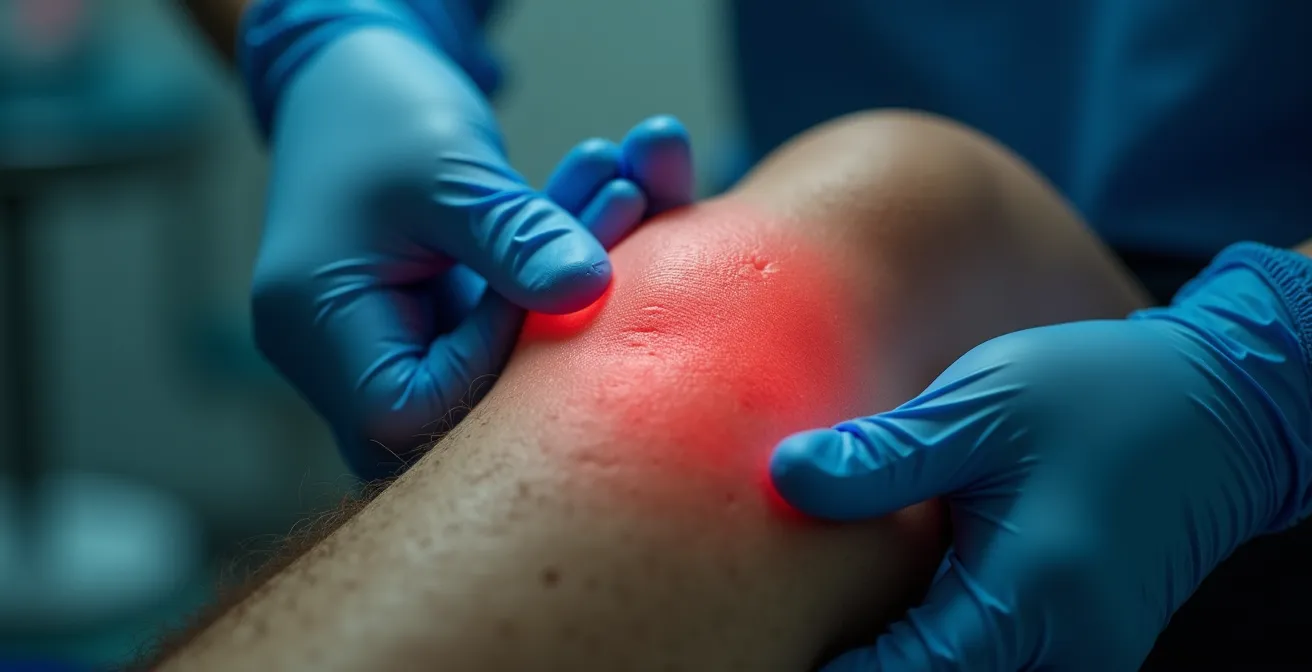
Clinical examination techniques can differentiate these pain sources through provocation testing. Mechanical pain intensifies with weight-bearing stress and joint loading, while inflammatory pain responds more to passive range of motion and morning stiffness patterns. Understanding this distinction empowers patients to provide orthopedists with precise symptom histories that accelerate accurate diagnosis.
Functional Loss Thresholds That Indicate Irreversible Progression
Quantifiable functional deficits provide objective benchmarks for surgical decision-making that transcend subjective pain reporting. Specific range-of-motion limitations and performance-based tests correlate directly with anatomical damage stages, allowing patients to self-position on the conservative-to-surgical continuum.
Knee flexion capacity serves as a primary functional indicator. When flexion falls below 90 degrees, patients cannot sit normally in standard chairs, enter vehicles without assistance, or perform basic hygiene tasks. This threshold reflects advanced capsular fibrosis and contracture formation that conservative stretching rarely reverses. Similarly, extension deficits exceeding 10 degrees indicate permanent flexion contracture, a structural deformity requiring surgical release for correction.
Walking distance tolerance provides validated prognostic information. Longitudinal studies tracking conservative treatment outcomes identified 400-meter walking capacity as a critical threshold. Patients unable to walk this distance without severe pain demonstrate statistically significant treatment failure rates exceeding 70% over 12-month follow-up periods, regardless of therapy intensity.
Daily activity abandonment patterns reveal functional decline velocity. Inability to ascend stairs using alternating steps, requiring arm assistance to rise from seated positions, and discontinuing basic household tasks beyond recreational sports signal advanced pathology. These specific losses indicate that joint deterioration has progressed beyond the recreational impact stage into basic life function compromise.
| WOMAC Domain | Success Threshold | Failure Threshold |
|---|---|---|
| Pain | Score below 4 indicates good conservative response | Score above 7 |
| Stiffness | Score below 1 | Score above 3 |
| Function | Score below 15 | Score above 26 |
Deterioration velocity matters as much as absolute function levels. Patients experiencing greater than 20% functional capacity loss over three to six months demonstrate rapid-progression osteoarthritis patterns. This accelerated decline predicts poor conservative outcomes and supports earlier surgical consultation compared to slow, gradual functional reduction over years.
These functional benchmarks transform subjective disability into objective surgical candidacy criteria. By tracking specific performance metrics rather than relying solely on pain intensity, patients gain quantifiable evidence for medical decision-making conversations.
Clinical Evidence Your Orthopedist Actually Uses to Time Surgery
Orthopedic surgical recommendations derive from validated assessment systems that combine symptom reporting, functional testing, and imaging findings into algorithmic decision frameworks. Understanding these clinical tools demystifies the recommendation process and enables patients to participate actively in timing discussions.
The WOMAC score quantifies pain, stiffness, and physical function through 24 standardized questions, generating numerical subscales that predict surgical benefit probability. Meta-analyses of surgical outcomes identify total scores exceeding 39 out of 96 possible points as correlating with significant post-operative improvement, while scores below 25 suggest conservative therapy may still provide meaningful benefit. This threshold-based approach removes subjective interpretation variability.

The consultation moment represents a collaborative analysis where clinical scores meet patient priorities. Effective orthopedists explain how imaging findings align with functional deficits, creating triangulated evidence that either supports or questions surgical timing. This transparency builds trust and ensures decisions reflect both medical necessity and personal readiness.
The Kellgren-Lawrence radiographic classification system grades osteoarthritis severity from 0 to 4 based on joint space narrowing and bone spur formation. Grade 3 designation, characterized by marked joint space reduction and definite osteophytes, represents a statistical inflection point where conservative treatment success rates drop below 30% according to systematic reviews. Grade 4, indicating bone-on-bone contact with severe space loss, demonstrates conservative failure rates exceeding 85%.
Advanced MRI criteria provide granular cartilage assessment through the Outerbridge classification. Grades 3 and 4, representing deep cartilage fissuring and full-thickness loss exposing subchondral bone, indicate damage beyond biological repair capacity. Associated findings including bone marrow edema patterns, complex meniscal tears without repair potential, and multi-ligament insufficiency create compounding indications that strengthen surgical recommendations.
The algorithmic combination of these elements creates validated surgical indications. Symptom persistence beyond three to six months despite optimal conservative therapy, combined with imaging confirmation of Grade 3-4 structural deterioration, plus documented functional impact through standardized scoring, constitutes the triangulated evidence standard that justifies procedural intervention. This multi-factorial approach prevents both premature surgery and harmful delay.
The Biological Cost of Delaying When Surgery Is Indicated
Once clinical thresholds validate surgical necessity, continued delay initiates cascading pathological processes that compromise eventual surgical outcomes and extend recovery timelines. Understanding these temporal consequences transforms vague hesitation into urgency grounded in biological reality.
Cartilage loss acceleration follows exponential rather than linear patterns after critical damage thresholds. Biomechanical studies demonstrate that once Kellgren-Lawrence Grade 3 pathology develops, remaining cartilage deteriorates three times faster than earlier disease stages. Abnormal mechanical loading from joint space narrowing creates stress concentrations that propagate existing defects, establishing a self-reinforcing destruction cycle resistant to conservative intervention.
Muscular atrophy develops rapidly during pain-induced activity limitation. Quadriceps muscle groups lose 1-2% of strength capacity weekly during periods of reduced weight-bearing activity. Surgical case series comparing outcomes in patients with preserved versus severely atrophied musculature reveal 40% longer rehabilitation periods and 25% rates of incomplete functional recovery in the atrophy group. Pre-operative muscle conditioning cannot fully reverse chronic wasting, making early intervention protective.
Progressive bone deformity complicates surgical technique and implant selection. Varus or valgus angulation that worsens during conservative treatment delays creates mechanical malalignment requiring additional corrective procedures. Simple knee replacement in well-aligned joints demonstrates superior outcomes compared to cases requiring simultaneous osteotomy or constrained prosthetic designs necessitated by severe deformity.
Optimal intervention windows exist for maximizing surgical benefit. Comparative effectiveness research analyzing thousands of knee replacement cases identified a clear pattern: surgeries performed within 6-12 months of indication demonstrate 15-20% higher patient satisfaction scores and 30% lower complication rates compared to procedures delayed beyond two years. The biological explanation centers on limiting secondary damage to surrounding structures during the pre-surgical waiting period.
These temporal factors create medical urgency distinct from emergency situations. While knee arthritis rarely constitutes an acute crisis, the progressive nature of joint destruction means that each month of delay after surgical thresholds are met compounds the difficulty of achieving optimal outcomes. For a detailed analysis of financial planning considerations, explore the comprehensive breakdown of cost of knee replacement surgery factors.
Key Takeaways
- Pain transitioning from activity-dependent to constant rest patterns with nocturnal bone pain indicates structural failure beyond conservative treatment capacity
- Flexion below 90 degrees and walking limitations under 400 meters correlate with over 70% conservative therapy failure rates
- WOMAC scores exceeding 39 points combined with Kellgren-Lawrence Grade 3-4 imaging create validated surgical indications
- Delaying surgery after indication accelerates cartilage loss threefold and causes muscle atrophy extending recovery by 40%
- Optimal surgical timing within 6-12 months of indication yields 15-20% better satisfaction and 30% fewer complications than delayed intervention
Conservative Treatment Failure Markers That Justify Surgical Consultation
Defining treatment failure requires establishing what constitutes an adequate conservative trial. Incomplete or suboptimal non-surgical approaches cannot validate surgical necessity, while prolonged ineffective therapy after proper protocols delays appropriate intervention.
A comprehensive conservative protocol includes simultaneous rather than sequential interventions. Supervised physical therapy at minimum twice-weekly frequency for 8-12 weeks, pharmaceutical management with appropriately dosed anti-inflammatory medications, activity modification to reduce damaging loading patterns, weight optimization for patients with BMI exceeding 30, and staged injection therapy progressing from corticosteroids to viscosupplementation constitute the evidence-based minimum. Improvement below 30% on validated pain and function scales after this combined approach meets failure criteria.
Quantitative failure thresholds remove subjective interpretation. Pain reduction less than 2 points on the 10-point Visual Analog Scale, functional improvement below 20% on WOMAC subscales, and persistence of major activity limitations affecting ambulation, stair climbing, and sleep quality despite three months of optimal combined therapy document objective treatment resistance. These numerical benchmarks provide clear decision points.
Certain imaging findings predict conservative failure with sufficient reliability to justify abbreviated trial periods. Kellgren-Lawrence Grade 4 arthritis with complete joint space loss, mechanical axis deviation exceeding 10 degrees creating varus or valgus thrust, and multiplanar ligamentous instability demonstrate conservative failure rates above 80% in longitudinal studies. Prolonged non-surgical management in these contexts delays inevitable surgery without providing realistic improvement probability.
Before finalizing surgical decisions, patients should verify several critical elements. Have all conservative modalities been attempted simultaneously at therapeutic intensity for sufficient duration? Does recent imaging within six months confirm structural deterioration matching symptom severity? Has functional impact been objectively documented through standardized assessment tools? Are medical comorbidities optimized and expectations realistic regarding surgical outcomes and rehabilitation requirements? For patients exploring all options before proceeding, evidence-based information on natural pain relief alternatives may complement medical decision-making.
These validation questions ensure surgical recommendations reflect genuine treatment failure rather than incomplete conservative trials. The goal remains avoiding premature intervention while preventing harmful delay once appropriate thresholds are documented.
Frequently Asked Questions on Knee Surgery
What defines conservative treatment failure?
Conservative treatment failure occurs when combined optimal therapy including supervised physical therapy, pharmaceutical management, activity modification, and injection protocols produces less than 30% improvement in pain and function scores after 3 months. This must be documented through validated assessment tools rather than subjective impression alone.
How quickly does cartilage deterioration accelerate after reaching Grade 3 arthritis?
Biomechanical studies demonstrate that cartilage loss accelerates approximately three times faster once Kellgren-Lawrence Grade 3 pathology develops compared to earlier stages. The abnormal mechanical loading from joint space narrowing creates stress concentrations that establish self-reinforcing destruction cycles resistant to conservative management.
Can muscle atrophy from delayed surgery be fully reversed with rehabilitation?
Chronic quadriceps atrophy from prolonged pre-surgical delays cannot be completely reversed through post-operative rehabilitation in approximately 25% of cases. Patients with severe muscle wasting demonstrate 40% longer recovery periods and incomplete functional restoration compared to those proceeding to surgery with preserved muscle mass.
What is the optimal timeframe for knee surgery after clinical indication is established?
Comparative effectiveness research identifies 6-12 months after surgical indication as the optimal intervention window. Procedures performed within this timeframe demonstrate 15-20% higher patient satisfaction and 30% lower complication rates compared to surgeries delayed beyond two years, primarily due to limiting secondary structural damage during waiting periods.